
Paw Prints- Los Cabos Animal News by The Pet Nanny
My current foster dog has been diagnosed with a tick borne disease called Ehrlichia, it is a common and potentially deadly illness, although hers was caught early, she is on medication and her prognosis is good. This disease is PREVENTABLE and the following article explains the illness, treatments and most importantly, the preventions available.
Please protect your canine friends from this illness. Thank you!
Ehrlichia Infection in Dogs
What are Ehrlichia?
Ehrlichia, named for the Dr. Ehrlich who first described them, are a type of bacteria that infect and live within the white blood cells of their hosts. Different types of Ehrlichia live in different types of white blood cells. Hosts can be human, pet, or wild animals. Ehrlichia are spread from host to host by tick bites and their intracellular location makes them difficult to remove as most antibiotics do not penetrate to the inside of cells.
What Ticks are Involved with Ehrlichia?
Different Ehrlichia species are spread by different types of ticks. (What ticks are located in a particular area limits what types of Ehrlichia infections are seen regionally.)
The Brown Dog Tick usually spreads Ehrlichia and other diseases.
|

The Lone Star Tick (Note the star on the tick’s main body.)
|
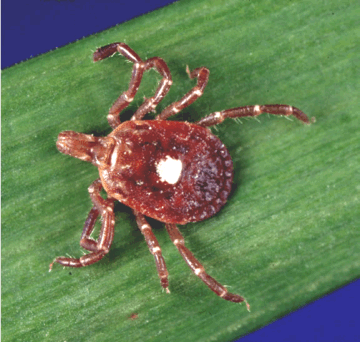
It is important to note, where there are ticks there are many tick-borne diseases: Lyme disease, Babesia infection, Anaplasma, Ehrlichia, and probably some agents we do not even know of yet. It is not surprising for a given patient living in a tick area to be infected with multiple blood parasites.
When Dogs get Sick
There are three phases of illness with Ehrlichiosis: acute, subclinical, and chronic.
-
ACUTE PHASE: This is generally a mild phase and occurs 1 to 3 weeks after the host is bitten by the tick. The dog will be listless, off food, and may have enlarged lymph nodes. There may be fever as well but rarely does this phase kill a dog. Most dogs clear the organism if they are treated in this stage but those that do not receive adequate treatment will go on to the next phase.
-
SUBCLINICAL PHASE: In this phase, the dog appears normal. Dogs can stay in this phase for months or even years. The only hint that Ehrlichia is hiding is a somewhat reduced platelet count and/or elevated globulin level on a blood test.
-
CHRONIC PHASE: In this phase the dog gets sick again. Up to 60% of dogs infected with Ehrlichia canis will have abnormal bleeding due to reduced platelets numbers. Deep inflammation in the eyes called uveitis may occur as a result of the long-term immune stimulation. Neurologic effects may also be seen.
How the Diagnosis is Made
Diagnosis does not rest on a single test but instead on a collection of results. The first step is to find a constellation of typical findings:
-
A dog with fever, enlarged lymph nodes, bleeding, or arthritis in multiple joints.
-
Low platelet numbers, high globulin levels, and mild anemia on blood testing.
When Ehrlichiosis is suspected, a blood test for antibodies against Ehrlichia organisms can be ordered. A positive test indicates that the dog has been exposed to Ehrlichia and does not imply active current infection necessarily. A negative titer does not fully rule out Ehrlichia, either, as a very sick patient will be too sick to produce antibodies and an early case may not yet have started to produce antibodies.
Treatment
Despite being one of the oldest antibiotics in use, tetracycline is probably the most effective against Ehrlichia (and any other intracellular blood parasite for that matter). Doxycycline, a more modern derivative, has a more convenient dosing schedule and has become more popular. Expect at least a month of treatment to be needed. Response is initially rapid (improvement is notable in the first few days).
After infection, it is possible to become re-infected; immunity is not lasting after a previous infection.
Tick Prevention
Spray a insecticidal soap onto the yard to reduce tick population. You can make your own safe insecticide soap by shaving 1 inch of hard laundry soap into 1 quart of warm water. Mix until the soap is dissolved. Put 1 teaspoon of this soap concentrate into a garden sprayer and spray the area with the ticks. The soap suffocates the ticks without harming the plants.
Frontline Flea and Tick Control is used mostly, as it is the easiest to find. Revolution does not work well on the ticks in this area.
NATURAL PREVENTION
* Herbal flea/tick powder or spray, these products use various herbal combinations to prevent ticks.
*Herbal flea/tick collars, there are several on the market but you can make your own at home. Using a rope collar or a bandana, apply several drops of essential oils (Eucalyptus, Tea Tree, Citronella, Lavender or Geranium) to the fabric and allow it to absorb. Reapply weekly.
*Citrus repellent: Cut a lemon into quarters and put into a pint jar. Cover with boiling water and let steep overnight. Put the solution in a spray bottle and spray all over the dog, especially behind the ears, around the head, at the base of the tail and in the arm pits.
* Cedar chips are an excellent home remedy for many insects and pests, including ticks and fleas. Dog beds also can be purchased with cedar chips inside them. Ticks do not like the smell of cedar and will avoid the area. Place them in the dog house also.
*Keep a sticky tape lint roller handy . This little gizmo will pick up unattached ticks from clothing or pets. Use after a walk.
* Rinse your dog with diluted good quality apple cider vinegar after shampooing.
Dietary Tick Prevention
My chihuahua friend, Benjamin (20 years mas or menos) and LaPita both take the following supplements. Since their rescues, neither have ever been visited by a tick or flea! I wish I could say the same!!
* Brewer’s Yeast comes in tablets and powder, with or without garlic. It’s easiest to give Brewers Yeast in tablet form. 1 for every 10 pounds of weight. They are chewable and dogs like the taste. The Brewers Yeast makes the dog’s blood acidic and repels both ticks and fleas.
*Garlic given as a dietary supplement makes the dog less appealing to ticks. The smell is excreted through the skin and repels both ticks and fleas. However, garlic contains sulfoxides and disulfides, which can damage red blood cells and cause anemia in dogs. If you use garlic use it sparingly.
*Apple Cider Vinegar adds acidity to your dog’s blood, making it less appealing to ticks and fleas. Add 2 Tablespoons of a good quality apple cider vinegar to your dog’s water bowl as a preventative.
Your dogs good health also does its part in preventing ticks. Good quality food, supplements, regular checkups and exercise are important!
